GLP-1 (Wegovy or Mounjaro) for "Skinny Fat" & Low BMI
A new pattern in Bangkok aesthetic clinics: BMI 23–25 patients asking for medications labeled for obesity. Some genuinely benefit when supervised correctly. Some should not be on these drugs at all. This is how I distinguish between the two.
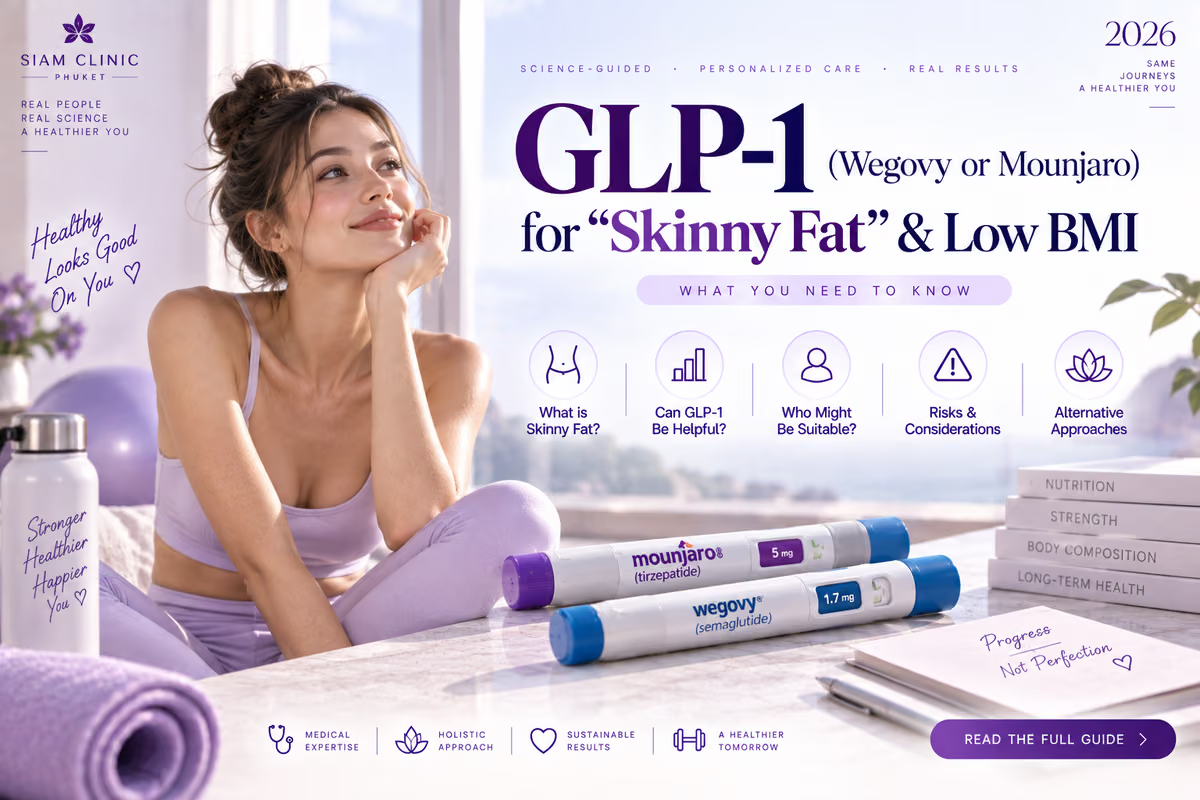
Introduction: Can You Use Injections if You Aren't "Obese"?
In Bangkok's aesthetic clinics, a new trend is emerging. It isn't just patients with obesity asking for Wegovy or Mounjaro anymore. It is individuals with a BMI of 23, 24, or 25 who can't seem to lose that last pocket of belly fat.
In my own consultation room, this group has grown noticeably over the past year — consults with normal-BMI patients now make up a meaningful share of the GLP-1 inquiries we receive. Many of these patients should not be on these drugs at all; some genuinely benefit when supervised correctly. Below is how I separate the two.
Medically, this is known as Normal Weight Obesity or being "Skinny Fat." You look thin in clothes, but your body composition is high in dangerous visceral fat.
But is it safe to use potent medical-grade injections for this? The answer is yes, but only with a modified protocol.
1. The "Asian BMI" Reality Check
First, forget Western standards. In Thailand, our health risks start at lower weights. 1
- Western standard: Obesity starts at BMI 30.
- Asian standard: Obesity starts at BMI 25 (per WHO Asia-Pacific classification, 2004).
- The "Skinny Fat" danger zone: If your BMI is 23–24.9 but you have a high waist circumference or high cholesterol, you are medically "overweight" by Asian standards.
Verdict: You likely qualify for medical treatment, even if you don't look "fat."
Important disclosure: Use of GLP-1 medications below the FDA-approved BMI thresholds (BMI < 30, or < 27 with comorbidities) is considered off-label and requires careful physician supervision and individualised risk-benefit assessment.
2. Why Mounjaro is Superior for "Skinny Fat"
For patients with lower BMIs, the goal isn't just "weight loss" — it is body recomposition.
- Wegovy (semaglutide): Primarily suppresses appetite. If you are already eating small portions, this might just make you starve, leading to muscle loss.
- Mounjaro (tirzepatide): The added GIP hormone improves how your body processes sugar and burns fat.
- The benefit: It targets visceral fat (belly fat) more aggressively than Wegovy. This is perfect for the "Skinny Fat" patient who needs to lose the belly, not the muscle.
3. The Risks of Low-BMI Usage (Read This!)
Using these powerful drugs when you are already lean (BMI < 23) comes with specific risks that obese patients don't face.
Risk #1: Sarcopenia (Muscle Wasting)
When a lean person loses weight rapidly, 25% to 40% of that weight can be muscle, not fat. 2,3 This ruins your metabolism and leads to the "gaunt" look.
The fix: You must eat 1.5 g of protein per kg of body weight and lift weights.
Risk #2: "Ozempic Face"
Loss of facial fat pads happens faster in lean patients.
Risk #3: Hypoglycemia
If you don't have enough sugar reserves, potent drugs like Mounjaro can drop your blood sugar too low, causing dizziness or fainting.
4. The "Micro-Dosing" Protocol
For low-BMI patients, we do not use the standard high doses found in US studies. We use a "micro-dosing" or "maintenance-first" approach.
- Standard dose (obesity): Scales up to 2.4 mg (Wegovy) or 15 mg (Mounjaro).
- Low-BMI dose: We often stay at the lowest effective dose (e.g., 0.25 mg Wegovy or 2.5 mg–5 mg Mounjaro).
- Why? This provides appetite control and metabolic benefits without nuking your daily calorie intake, allowing you to eat enough protein to protect your muscle.
- Short-term cycles: Instead of staying on the drug for life, non-obese patients might use it for 3–4 months to break bad eating habits or reset their appetite, then wean off.
- Protein loading: You must eat double the protein of a normal person to protect your muscle tissue while on the drug.
5. Thai FDA Warning: Beware of "Slimming Pens"
The Thai FDA has cracked down on online sellers marketing these as "cosmetic beauty pens."
- The law: These are prescription drugs, not beauty supplements.
- The trap: Buying online often means getting fake pens or pens that were not kept cold (rendering them useless).
- The rule: Never use these drugs if your BMI is below 18.5 or if you have a history of eating disorders.
6. When You Should NEVER Do It
Ethical doctors will refuse to treat you if:
- You have a history of eating disorders (anorexia/bulimia).
- Your BMI is below 18.5.
- You are looking for a "quick fix" without changing your diet. (The weight will come back instantly.)
Conclusion: Is It Right for You?
If you have a BMI of 35, the goal is saving your life. If you have a BMI of 24 (Skinny Fat), the goal is metabolic optimization.
You can use Wegovy or Mounjaro to fix "Skinny Fat," but you should treat it like a scalpel, not a hammer. Use low doses, prioritize protein, and monitor your muscle mass with a doctor every month.
Think you might be "Skinny Fat"? Book a body composition analysis at Phuket Weight Loss Center to see your true visceral fat level.
Related reading:
- Why Your BMI Means Different Things in Asia →
- Why Muscle is Your "Metabolic Insurance" →
- 2026 Guide for Asian Bodies & Thai Patients →
Tagged
skinny-fat low-bmi off-label visceral-fat
Medically reviewed
Siam Clinic Medical Team · Dr. Akkavich, M.D.
All clinical claims verified against peer-reviewed sources. How we write & cite →
References
- WHO Expert Consultation. Appropriate body-mass index for Asian populations and its implications for policy and intervention strategies. Lancet. 2004;363(9403):157-163.
- Conte C, Hall KD, Klein S. Is weight loss-induced muscle mass loss clinically relevant? Nutrients. 2024.
- Prado CM, Phillips SM, Gonzalez MC, Heymsfield SB. Muscle matters: the effects of medically induced weight loss on skeletal muscle. Lancet Diabetes Endocrinol. 2024.